


Insomnia Cookies
4.81.89K Reviews
App Specs
- Version
- 10.1.1
- Updated On
- License
- Free
- Downloads
- 500,000+
- Developer
- Insomnia Cookies LLC
- Categories
- Food & Drink
- Platform
- Android, iOS
Screenshots

 Analysis by AppCompare
I installed Insomnia Cookies expecting a simple way to order something sweet, and that is exactly where its appeal begins. This is a Food & Drink app from Insomnia Cookies LLC, built around online cookie ordering rather than trying to become a full restaurant marketplace. In my experience, that narrow purpose is both its biggest strength and its main limitation: when I want cookies, the app feels more direct than browsing a broad delivery service, but it is not meant to replace every food-ordering tool on my phone.
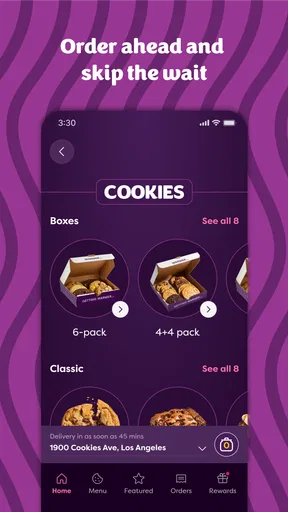
The first impression is easy to understand. I can open the app when a late-night craving appears, look through the available cookie choices, build an order, and move toward checkout without sorting through unrelated restaurants. The app is free, carries an Everyone age rating, and supports devices using Android 8.0 or later. Its current version is 10.1.1, while its long presence in the mobile stores dates back to Jul 11, 2014. Those details matter less than the everyday question: does it remain useful after the first novelty wears off?
From first-week temptation to a repeat ordering habit
I look at the shift from an appealing first download to a habit that earns its place on my phone. The key is to notice which occasions genuinely benefit from a dedicated cookie-ordering route, rather than opening it simply because ordering is easy. That distinction also sets up a closer look at how comfortably the experience works across different needs and situations.
Why the first few sessions feel so convenient
During the first week, the focused design is the most noticeable benefit. A general delivery app makes me think about meals, drinks, groceries, fees, and competing restaurants before I even decide what I want. This app starts from a much clearer intention. If the answer is “cookies,” there is less mental effort between the craving and the order. That makes it especially appealing when I am ordering for a small group and do not want to negotiate a full meal.
I also like the difference between browsing for a planned treat and reacting to an impulse. For a planned movie night, study session, office break, or small celebration, a dedicated cookie-ordering app keeps the decision focused. I can think about quantities and varieties instead of being distracted by unrelated menus. That sounds minor, but reducing choices can make a food app feel faster even when the actual ordering steps are familiar.
A realistic use case is a weeknight when friends arrive unexpectedly and nobody wants to go back out. One person can handle the order while everyone agrees on the selection. The app is better suited to that moment than opening a broad delivery platform and searching through dozens of restaurants that may not have the specific dessert everyone wants. It is also a reasonable option when I want a dessert delivered separately from dinner, rather than adding cookies to a much larger meal order.
What to check before placing the first order
The most useful habit I developed was checking the order details slowly before submitting. A craving encourages quick tapping, but dessert orders are easy to get wrong when I am choosing several items for different people. I recommend deciding whether the order is for one person, a shared box, or a small event before browsing. That simple distinction helps prevent buying too little for a group or filling the basket with items nobody actually requested.
Worth Reading Before You Choose

EA SPORTS FC Mobile 26 Is a Bigger Football Game, but It Takes Time

Flipboard Shows What News Apps Must Do Beyond the Feed

Switching to Android Auto Means Rethinking Your Driving Routine

Google Calendar Makes a Crowded Week Easier to Manage

Ludo King Makes the Most of the Minutes Between Plans

Baby Panda World Brings Quick Play to Modern Phones, but Its Game Library Feels Busy
I would also confirm the delivery information and review the basket at the end rather than assuming the last selection is obvious. This is not a criticism unique to this app; it is a practical safeguard for any food-ordering service. The difference here is that the app’s narrow purpose can make me move too quickly because the process feels uncomplicated. The fewer distractions there are, the easier it is to forget that the final review still matters.
For a first-time user, the key question is not whether the app is difficult. It is whether the local ordering experience matches the moment. If I am already using a delivery service with a better saved address, payment setup, or broader selection nearby, switching apps may not be worthwhile for a single order. The dedicated route becomes more convincing when I specifically want Insomnia Cookies and expect to order again.
Who gets the strongest first-week value
This app makes the most sense for people who already know they enjoy the brand and want a direct ordering route. It is also useful for households where dessert orders happen often enough to justify keeping a specialized app installed. Students, families, office teams, and anyone who occasionally organizes a casual treat can understand the value quickly.
On the other hand, I would not recommend installing it solely because every food app seems worth trying. If cookies are an occasional impulse and storage space or notifications matter to you, a browser or an existing delivery app may be enough. The dedicated experience is convenient, but convenience only becomes meaningful when the underlying order is something you make with some regularity.
The first-week lesson: focused is not the same as complete
My early impression was positive because the app does not pretend to solve a problem larger than cookie ordering. That focus gives it a cleaner purpose than a general marketplace. At the same time, I quickly understood that it should be treated as a specialist tool. It will not help me compare a cookie order with pizza, coffee, groceries, or a full dinner in one place. For some users, that limitation will feel refreshingly simple; for others, it will feel like one more app for a task they can already complete elsewhere.
The app has a 4.8 average from around 13 thousand ratings, with roughly 1.9 thousand written reviews, and it has passed the half-million-install mark. I read those figures as evidence that the basic idea connects with a substantial audience, not as a guarantee that every order will feel perfect. A strong rating can tell me that many people like the experience, but my own decision still depends on ordering frequency, local availability, and whether a specialist app fits my routines.
What changes after the novelty fades
After the first month, the question becomes more demanding: am I opening the app because it genuinely saves effort, or because the novelty of a dedicated cookie app has not yet disappeared? For me, the answer depends on repetition. If I order from the same service several times, the app earns a place by shortening a familiar task. If I use it once and forget it, the focused interface is pleasant but not especially valuable.
Monthly value comes from predictable occasions rather than constant use. A birthday, a recurring team meeting, a weekend gathering, or a regular study night can turn the app from a novelty into a small planning tool. I appreciate that it can keep dessert ordering separate from meal decisions. That separation is useful when the main meal has already been handled or when different people are responsible for different parts of an event.
There is also a social advantage to a dedicated ordering flow. When several people are choosing cookies, the basket becomes the shared reference point. Instead of passing around a broad restaurant menu, I can ask everyone to settle on a few dessert options and then place one focused order. This is not a sophisticated collaboration feature; it is simply a clearer workflow. The app works best when one person takes responsibility for the final basket and checks it carefully.
When a broad delivery app is still better
I would choose a general delivery platform when I need to compare delivery options, combine dessert with a meal, or coordinate several kinds of food. A broader service may also be more convenient if I already have my address and payment details organized there. The specialist app wins when the destination is already decided. The general app wins when I am still deciding what to eat.
That distinction is important for long-term value. A cookie-focused app is not automatically more convenient simply because it has fewer categories. It is more convenient when the reduced scope matches my intention. If I frequently change my mind between desserts, drinks, and meals, the narrow menu may create extra app switching rather than saving time.
Three practical habits that improve recurring use
First, I treat the app as an occasion planner rather than a random-craving button. Before opening it, I decide how many people I am feeding and whether the order is meant to be shared. That makes browsing more purposeful and reduces the chance of an unbalanced basket.
Second, I use one order as a reference for the next similar event. If an amount worked well for a small gathering, I remember that structure instead of starting from scratch. This is a simple personal workflow, but it is where a specialized app can become genuinely useful: it supports a repeatable decision better than a one-off search.
Third, I separate convenience from impulse. I ask whether I want the app because it makes an existing plan easier or because the easy ordering process is encouraging an unnecessary purchase. The app is good at reducing friction, and that is helpful when I have already decided. It is less helpful when I am trying to avoid unplanned spending or unnecessary snacking.
Maintenance: what deserves attention over time
The maintenance burden is fairly ordinary, but it should not be ignored. A dedicated food app needs to stay installed, updated, and easy to find even though I may use it only around certain occasions. The current version, 10.1.1, indicates an actively maintained release path, while the minimum Android requirement of 8.0 keeps it accessible to many older devices. Still, an update history alone does not make an app worth keeping; repeated usefulness does.
I would keep notifications under control and avoid allowing a food app to become background noise. If reminders are useful for a planned event, they can help. If they simply turn every quiet evening into a prompt to order, they add friction to my digital routine. The best maintenance strategy is to let the app serve a clear purpose and remove it if months pass without a realistic need for it.
Storage is not the only kind of maintenance. I also need to remember which app handles which order. Keeping a dedicated cookie service alongside a general delivery service can create small moments of confusion, especially when I am in a hurry. I find that naming the occasion in my own calendar or notes is more useful than relying on memory. For example, if I am responsible for dessert at a gathering, I plan that separately instead of waiting until everyone is already hungry.
Where recurring use can become tiring
The first source of fatigue is repetition. A focused app can feel wonderfully simple at the beginning, but repeated visits may expose how little variety the overall task requires. Once I know what I usually order, browsing may no longer feel engaging. That is not necessarily a design failure; it is the natural trade-off of a specialist app. Its job is to make a familiar purchase easy, not to provide endless discovery.
The second source is context switching. If I am ordering dinner through one service and dessert through another, I may need to manage separate baskets, confirmations, and delivery expectations. For a small order, that extra coordination can outweigh the benefit of the dedicated menu. I prefer this app when the cookie order is a separate, intentional part of the plan, not when I am trying to manage an entire meal in one sitting.
The third is impulse pressure. The app makes the path from wanting cookies to ordering cookies feel short. That is valuable when convenience is the goal, but it can work against anyone trying to be more deliberate with treats. I would not call this a defect specific to Insomnia Cookies, yet it is a real long-term consideration. A smooth ordering experience can make a decision feel smaller than it is.
Who should skip it
I would skip this app if I rarely order cookies, prefer preparing desserts at home, or already have a reliable service that handles every food purchase. I would also skip it if I need a single app for comparing restaurants and building a complete meal. The dedicated focus is not a benefit when the category itself is not part of my routine.
It may also be the wrong choice for someone who dislikes maintaining brand-specific apps. A free download does not remove the cost of clutter, attention, or repeated account management. If I only expect one occasional order, using an existing marketplace may be the more sensible option even if its cookie browsing is less direct.
Who should keep it installed
I would keep it installed for anyone who orders Insomnia Cookies often enough that the direct route becomes familiar. It is particularly suitable for people who organize recurring dessert occasions and want a focused way to handle them. The Everyone rating also makes it broadly approachable as a consumer food app, although adults remain responsible for making sensible ordering and dietary decisions for their households.
The developer, Insomnia Cookies LLC, has kept the app available across a long period, and its audience size suggests that this is more than a temporary experiment. That longevity supports confidence in the app’s basic purpose, but I still judge it by whether it earns a permanent place on my home screen. For me, the answer is yes only when cookie ordering is a recurring behavior rather than a rare event.
My long-term verdict
After the novelty fades, Insomnia Cookies earns its space through focus, not depth. It is a practical specialist for a specific craving and a useful companion for planned gatherings, shared treats, and recurring dessert orders. I like that it avoids the distraction of a broad marketplace, and I find its purpose easy to understand from the moment I open it.
Its weaknesses are equally clear. It is not the best tool for comparing many food categories, combining a full meal with dessert, or avoiding a separate brand app. Repeated users may eventually find the browsing experience routine, while occasional users may decide that an existing delivery service is sufficient. The app also lowers the effort required to order, so people trying to reduce impulse purchases should use that convenience thoughtfully.
My recommendation is straightforward: install it if you already expect to order from Insomnia Cookies more than once or if you regularly plan small dessert occasions. Try another option if your needs are broader, your cookie orders are rare, or you want to keep your phone limited to multipurpose services. For the right user, it has lasting value because it turns a familiar treat into a repeatable, low-effort task. For everyone else, the novelty is likely to fade before the app becomes a true habit.
Pros
- Late-night delivery is convenient for unexpected sweet cravings.
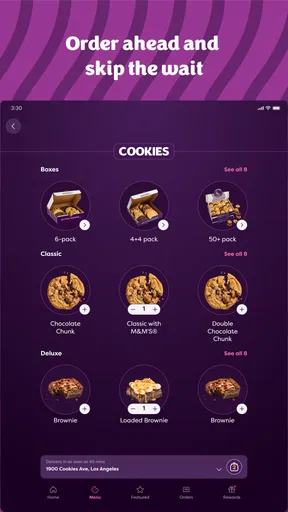
- The menu includes cookies
- brownies
- ice cream
- and other desserts.
- Store pickup can be faster and cheaper than delivery.
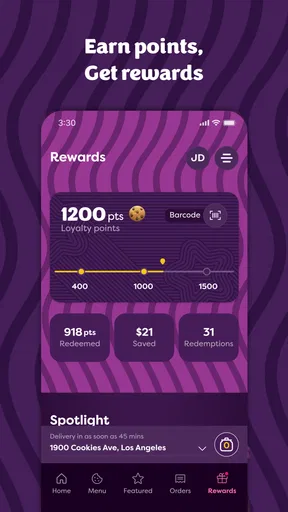
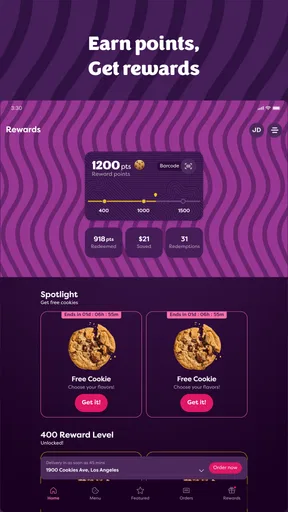
- Frequent promotions and rewards may help regular customers save.
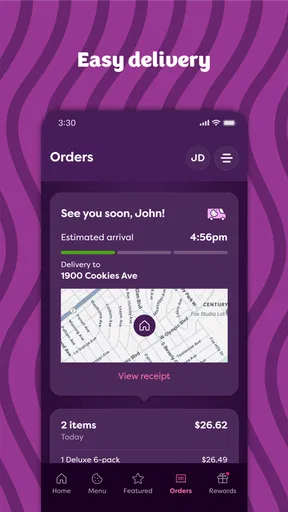
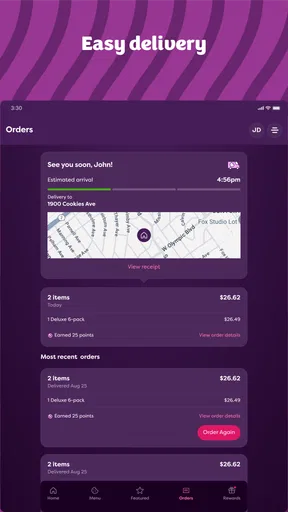
- Ordering details and delivery status are easy to check in the app.
Cons
- Delivery availability depends heavily on location and store hours.
- Fees can make a small order considerably more expensive.
- Cookie quality may vary when orders arrive after a long delivery.
- Popular items can sell out
- especially during late-night peak periods.
- Some rewards and promotions may include restrictions or expiration dates.
FAQs for Insomnia Cookies
What is the Insomnia Cookies app used for?
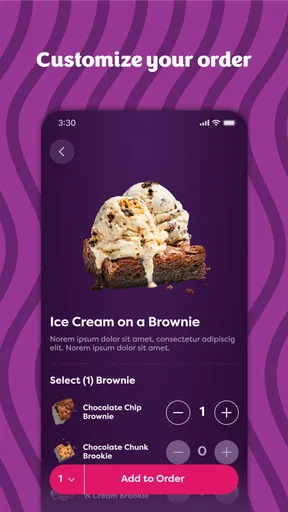
The Insomnia Cookies app is designed for browsing the brand’s cookie, brownie, ice cream, and dessert selections, then placing an order for delivery or pickup where available. After entering your location, you can view the menu, check estimated availability, customize certain items, add products to your cart, and follow the checkout process from your mobile device. Exact options may vary by store and local operating hours.
Can I order Insomnia Cookies for delivery through the app?
Yes, the app generally supports delivery ordering in locations served by Insomnia Cookies. Availability depends on your address, the selected store, delivery hours, local coverage, and current demand. Before completing an order, review the delivery fee, estimated arrival time, minimum order requirements, and any applicable taxes or service charges. Some locations may offer pickup instead of, or in addition to, delivery.
What types of products can I buy in the Insomnia Cookies app?
The menu typically includes freshly baked cookies in several flavors, cookie packs, brownies, ice cream, cookie cakes, and other dessert combinations. Some stores may also offer milk, vegan or allergy-conscious choices, gift options, and limited-time products. The selection is not identical everywhere, so the app’s location-specific menu is the most reliable way to confirm ingredients, sizes, prices, and current availability.
Does the Insomnia Cookies app offer discounts, rewards, or special promotions?
Insomnia Cookies may provide promotional codes, limited-time discounts, delivery offers, bundles, or rewards-related benefits through the app and its connected account system. Promotions can have restrictions, including expiration dates, minimum purchase amounts, participating locations, or exclusions for certain products and fees. It is worth checking the promotions section and reviewing the final checkout total before assuming an offer has been applied.
Is the Insomnia Cookies app available on both Android and iPhone?
Insomnia Cookies provides mobile ordering options for customers using supported Android and iOS devices, although the exact app name, features, and availability can change over time. Download it only through the official Google Play Store or Apple App Store, and confirm that the developer is the legitimate Insomnia Cookies brand. If the app is unavailable in your region, ordering may still be possible through the company’s official website.


